Effective use of AI by in-house lawyers depends less on finding the cleverest tool than on building methodical, reusable ways of working for recurring tasks in the legal function, while protecting confidentiality and professional judgement. That has been the starting point for this autumn's seminar series at the Nordic Legal Tech Academy. Across four sessions, the same practical questions surfaced repeatedly.
Four seminars and strong demand
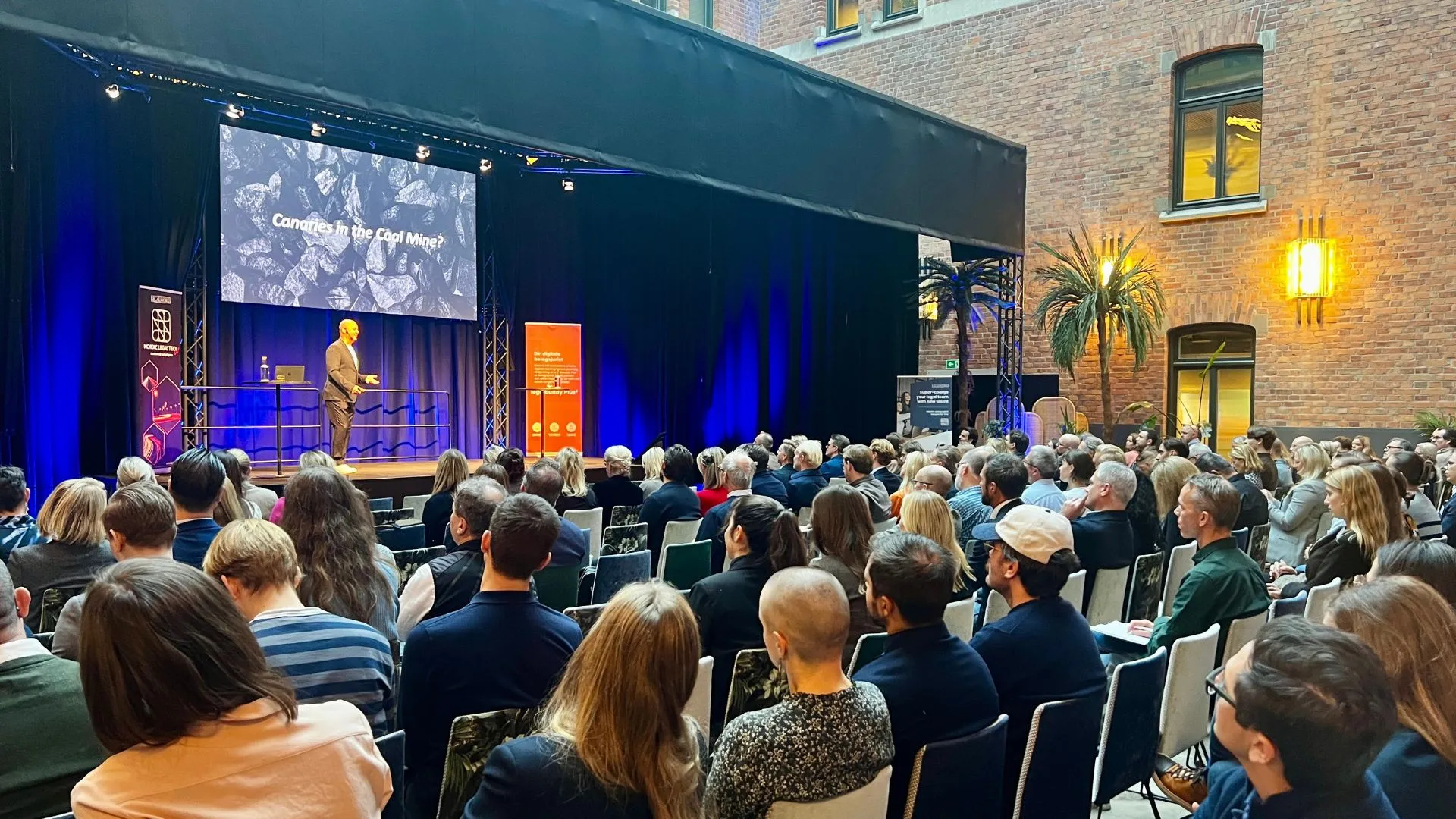
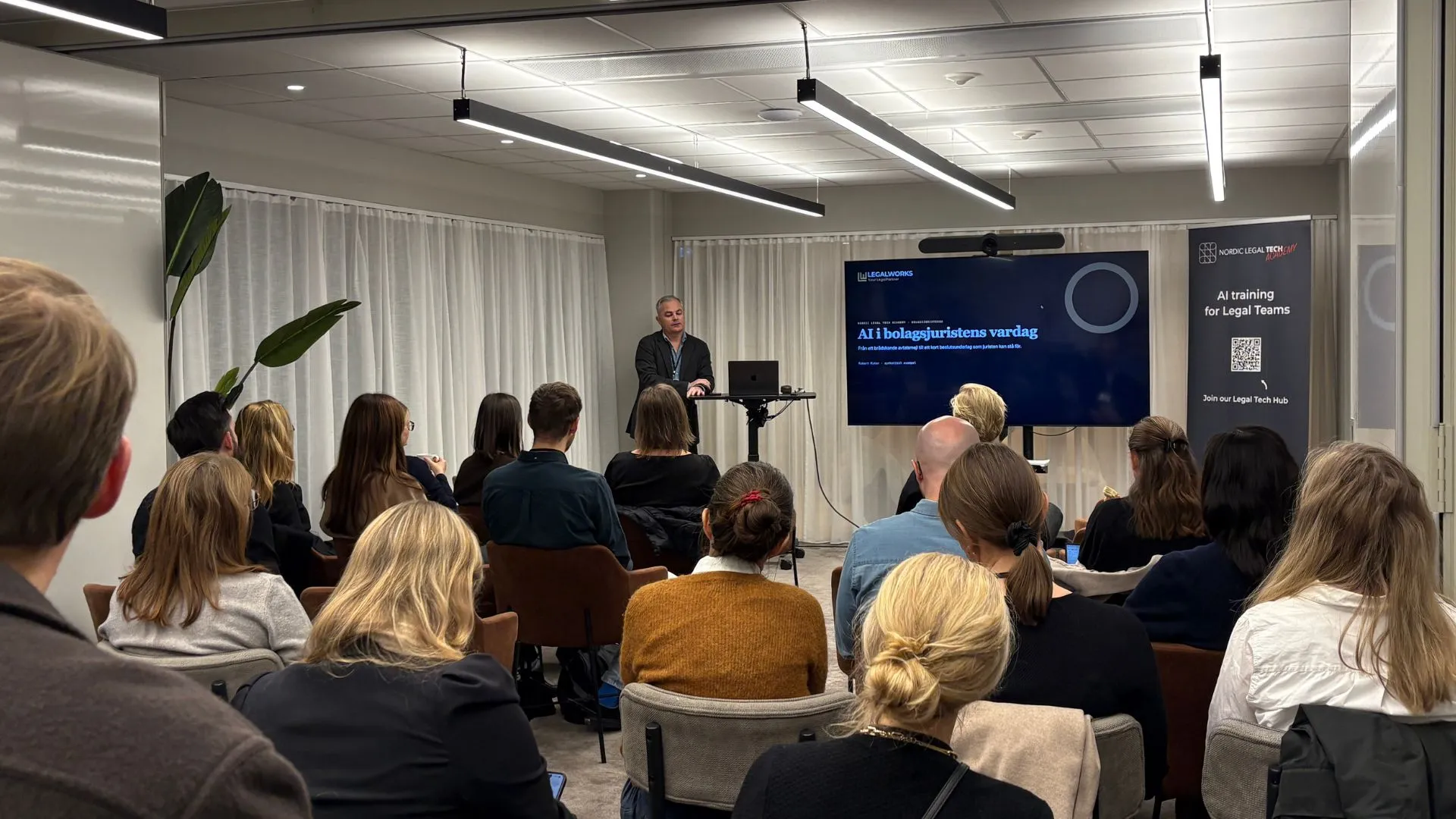
Through September and October we invited in-house lawyers (bolagsjurister) to breakfast seminars at United Spaces on Olof Palmes gata in Stockholm. The format was simple: one hour, in person, no livestream. On 16, 17 and 23 September and on 13 October we ran AI in the in-house lawyer's day-to-day.
The first three sessions filled quickly, and interest remained strong through the final session. The response reflects where many legal teams are now. The practical question is how to use AI responsibly, with reliable checks and a method that can be repeated.
Most participants were already using AI. Their questions were less about whether to start than about choosing the right task, supplying the context and sources the assistant lacks, and checking the result. Not every task warrants the extra setup: the expected value must justify the work needed to brief and review it. Where a task is repeated, the useful output can become a knowledge asset and, once tested, a reusable workflow or skill.
Robert Kuter: method before tools
Robert Kuter led the seminar series. He is a commercial lawyer with more than 20 years of in-house experience and previously built Ericsson's global legal operations function. At LegalWorks he works as a Senior Lawyer and AI lead, focusing on the practical use of AI, legal operations and global contract management.
The seminars were not product demonstrations. They focused on three concrete questions that legal functions need to answer:
· Where does AI actually add value in analysis, contract work and other recurring legal tasks?
· How are the risks managed – confidentiality, quality control and responsibility for the finaloutput?
· How do you move from ad hoc prompting to structured workflows that others in the team can use?
- The following participant feedback captures this approach:
Very good, with concrete, everyday examples that work whether you work in a larger or smaller organisation, and with a focus on methodology rather than selling various 'fancy' tools. Very useful in helping me think about how I use ChatGPT in my daily work. - Ulrika Ersman, Trapets
Our collaboration with Sveriges Bolagsjurister
The seminars were run in collaboration with Sveriges Bolagsjurister, the Swedish association of in-house lawyers. Many in-house lawyers work in small legal teams, cover a wide range of matters and face high demands for speed from the business. This differs from the setting of a law firm and benefits from a dedicated forum.
Together we have reached the right audience and kept the content close to that day-to-day reality. Many thanks to Sveriges Bolagsjurister for their trust – and to every participant who brought questions and their own experience into the room.
Next step: a practical three-session course
The one-hour seminars left limited time for individual practice. The longer AI in practice for in-house lawyers course is designed to provide that time. It is also led by Robert Kuter.
Over three sessions you work on a recurring legal task from your own practice. With guidance, you build and test an instruction, a review checklist and a workflow that you can take back to your legal function.
- Wednesday 4 November, 09:00–12:00
- Wednesday 11 November, 09:00–12:00
- Wednesday 18 November, 09:00–12:00
- Venue: United Spaces, Olof Palmes gata 11 (7th floor), Stockholm – in person only
Last day to register, October 28.
Frequently asked questions
What do you learn on an AI course for in-house lawyers?
The course focuses on method rather than specific tools. You learn to structure instructions, review AI-generated material systematically and build a workflow for a recurring task, with confidentiality and quality at the centre.
Do I need previous experience with AI?
No. The course is suitable both for people who use ChatGPT or similar tools daily and for those who want to start in a considered way. You may bring a recurring legal task from your own work. Prepared exercises are also available if you cannot or should not use your own material.
How should in-house lawyers handle confidentiality when using AI?
Follow your organisation's rules and check which information may be used in the chosen tool. The course exercises use public, synthetic or expressly approved material and can be completed without confidential or identifiable client information. Reviewing the result remains essential, but that is a separate quality control.
Sign up
Places are limited and previous sessions filled quickly. Read more and register via the Nordic Legal Tech Academy.
AI course registration, click here
Questions about the courses? Get in touch with robert.kuter@legalworks.se